|
|
|
Categories
|
|
Information
|
|
Featured Product
|
|
|
 |
|
|
There are currently no product reviews.
 ;
Хорошее качество сканирования.
Мануал пришел часов эдак через 12. В целом доволен.
 ;
Fantastic quality and impressive delivery time. Based on this manual, I recommend this service without hesitation! Five Stars for certain.
;
Was happy to find the complete owners manual... It's all in there, just like the original...
;
Thanks for offering this item at such a good price. Proved handy in identifying the part I was looking for my set.
;
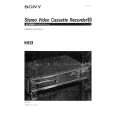
Thr Video Recorder i have is quiet Old and the Producer could Not help me. So i w as very glad to find an offer for the owners Manual for a very fair Price.a I obtained the original Manual very quick and I am happy to have it now.
The directivity index (DI) of the H9500 horn is shown in Figure 5. The smoothly rising DI is a consequence of the gradual narrowing of the vertical dispersion angle above 2 kHz and contributes to the overall flatness of the high-frequency response of the system.
20 100
Directivity Index, DI (dB)
10
10
0 20 50 100 200 500 1000 Frequency (Hz) 2000 5000 10000
1 20000
Overall system on-axis pressure response and impedance are shown in Figure 6. The contributions of the paralleled lowfrequency sections and the high-frequency section are shown individually along with their acoustical summation. The overall slopes in the crossover region are a combination of electrical (network) and acoustical response.
M9500 4.3V @ 1.5 m HF @ "0" 100dB Ground Plane Anecmoil
Directivity Factor, Q
Figure 5. Plot directivity index (DI) and directivity factor (Q) of the H9500.
Figure 6. On-axis response of M9500. Individual contributions of paralleled low-frequency transducers and high-frequency section are shown, along with their summation. The impedance curve is also given, showing a minimum value of 3 ohms
2
10 �
2
3
4
5 6 7 8 910 100
1.5
2
3
4
5 6 7 8 9 10 1.5 1000
2
3
4
5 6 7 8 9 10 1.5 10000
in the 100 Hz range.
The second and third harmonic distortion of the system is shown in Figure 7. Here, the system is driven with sine wave input to produce an output of 96 dB Lp at a distance of 1 meter. An output of 96 dB with a sine wave input corresponds to extremely high system output with wide band program material. Distortion curves have been raised 20 dB, and the values seen here lie well below 1% for the lowest frequencies up to 4.5 khz, reaching a value of only 1.6% at 10 kHz. Not many loudspeakers can demonstrate such low levels of distortion as shown here.
Figure 7. Second and third harmonic distortion for fundamental of 96 dB Lp at a distance of 1 meter. (Distortion raised 20 dB)
96dB M9500 Distortion 3.0V @ 1 m Distortion Raised 20dB Solid = Second Harm. Dash = Third Harm.
2
3
4
5 6 7 8 910 100
1.5
2
3
4
5 6 7 8 9 10 1.5 1000
2
3
4
5 6 7 8 9 10 1.5 10000
2
|
|
|
> |
|